Wednesday, January 16, 2013
Yes, but can't we still just accept it as plausible?
That's not how plausible works. I could say that I don't think that life on this process began with chemicals and random time like all the scientists doing real work on the subject actually think. But I think humans from the distant future traveled back in time and created this planet and invented the life on it.
Would you argue that is plausible and credible and open? Do you think there being no evidence against it or for it, is a mark in it's favor?
The answer really should be no. I can with enough special pleading make the claim that the moon is made out of green cheese something for which there is no evidence against. We know the density of the moon, well the cheese just happens to be very dense. We've been to the surface and found rocks, because it has rocks on the surface. If I explain away every objection with another bit of story I can get it to the point where we should find no evidence against the proposition of our moon being made out of green cheese in some kind of special way that makes it outwardly appear to be made out of rock.
Should we then say there's no evidence against the theory and at the very least we should consider it plausible and credible?
The actual answer is no. Evidence is largely defined by Bayes Theorem, and there are a few variables there for how ad hoc the hypothesis is and how much additional stuff you need to accept it and how good the alternative hypotheses actually are.
This is the case with Hameroff's theory. We should not consider it plausible or credible because it is stupid. It is trying to explain away a robust observation that our consciousness actually becomes aware of decisions our brains have made half a second later. It invokes utter crap that physicists and neuroscientists scoff in an attempt to explain these observations away. But, really we should just accept that those observations are true. The moon just happens to look exactly like it's made out of rock because it's made out of rocks. And our gap junctions have chemicals and only get triggered by chemicals and our brains consist of neurons firing in patterns because that's what we are, neurons firing in patterns. The truth isn't something that needs to be explained away with exotic explanations, it can actually just be true.
So, no. The fact that it's really absurd is actually considerable evidence against it. And the fact that the alternative is that what we see is what we get, and that explanation explains all the data that needs explaining suffices to say that a theory that needs to make thoughts exist in quantum fields and magically travel backwards in time, can go ahead and be discarded as wrong.
You may not solve the mystery of missing socks by involving elves. Elves are a greater mystery than missing socks. Socks go missing. You don't need to explain how because of QM they fell out of the universe and traveled forward in time and we'll end up getting them back. They really can just get lost. Brains really can just be a skullfull of neurons and chemicals. And the moon really can just be rock.

Hameroff and Penrose, nonsense²
Largely, this is cut and pasted from my reply to somebody on youtube about Hameroff and Penrose's idiotic theories about consciousness. It's really hard to explain how stupid they are but I fell I did a pretty good plain English explanation. And my blog is largely for myself, with the exception of the Trivia Bot parts that actually do a public service. But, I wouldn't want to lose such a nice reply so I put it here, where I could search and cite and rehash it in the future if it ever comes up.
-------------------
There's no evidence that particles that pop out of this universe likely by colliding with anti-particles or generally just doing so went into another universe. We just know that at the very very tiny spacetime is broiling with fun pops in and out of spacetime. There's very little to suggest there are any other universes involved or that this carries any information.
There are a series of experiments which have rather firmly established that what we are consciously aware of lags behind by about half a second. We can hit a baseball with a baseball bat but the actual decision isn't made consciously, but rather the conscious mind is informed of it later, and fills it in.
We've also done a lot of experiments with split brain patients and confabulation. Where a person is sat down, they are told via a message on their left side textually to stand up. They stand up. And are asked vocally why they stood up. The standing up was decided by the right brain, but the left brain is being asked to answer the question and they will wax poetic about how they were cold and left a jacket in the car or about how the chair isn't comfortable.
There's also an experiment where a person is shown two small pictures of people and asked who is more attractive. After they make the decision, the pictures are switched with a little slight of hand magic trick and they are further asked why they chose that picture (the one they didn't actually pick). They will explain the decision at length.
We know this stuff happens in the brain. But, then Hammeroff and Penrose don't think it does. It's not a quirky weird thing about the brain that consciousness is informed later and confabulates the answers as to why it made that decision. No. What happens according to them. Is that your conscious decision from the future magically travels back in time half a second through the quantum field and something about gap junctions to have actually made that decision that it could not have made.
This isn't some amazing truth they've stumbled on that means that atheists are really bad at their jobs, they are actually trying to argue that the Emperor has cloths on even though he's walking around naked. When you get passed the fancy buzz words and the physics you realize the physics has the richness of the particles and the quantum mechanics and all they have is a lot of made up stuff about how Quantum Mechanics therefore Consciousness is real rather than made up. Even though there is absolutely no indicator whatsoever that it's either needed or real.
I wouldn't really go out of your way to blame ego, or insist that he's proved souls existed because he proposed a theory you don't possess the acumen to poke holes in or the desire to do so. It's really nonsense. The universe is not a massive conspiracy to get your thoughts into your brain half a second early.
Tuesday, January 15, 2013
Coining a New Word: Hypothetica
Hypothetica: like estoricia or Americana, are those things of the esoteric or American. For example, "maybe there were swarms of bees and that's why he hid in that hole." or "maybe if there were a meteor heading towards Earth" those hypothetical things are hypothetica.
Sunday, January 6, 2013
Colorblindness and Maximally Distinct Color Palettes.
While I did bother to do a lot of legwork and effort to determine which colors are maximally distant the issue of color blindness was always on my mind. While you can push the list of distinct colors to a couple dozens (read left to right, top to bottom).

http://www.colblindor.com/2009/01/19/colorblind-colors-of-confusion/
It seems that given color blindness, you'd really be better off mixing in a few things other than just colors. While you could just use a static lookup list, which is likely the best for color distinction, you might want to consider if there's a better way to do that same thing with aspects that are more distinct to more people, like dashed lines, thicker lines, candicaned lines, marquee text made to fit a line, etc.
You get about four or five really distinct colors for those with lower gamuts of colors. And while my list is still really awesome. You might want to rethink your entire idea to use colors.
http://www.colblindor.com/2009/01/19/colorblind-colors-of-confusion/
It seems that given color blindness, you'd really be better off mixing in a few things other than just colors. While you could just use a static lookup list, which is likely the best for color distinction, you might want to consider if there's a better way to do that same thing with aspects that are more distinct to more people, like dashed lines, thicker lines, candicaned lines, marquee text made to fit a line, etc.
You get about four or five really distinct colors for those with lower gamuts of colors. And while my list is still really awesome. You might want to rethink your entire idea to use colors.
Monday, December 10, 2012
With a cause of justice, your enemies are easy to spot.
When your cause is justice, you can easily spot your enemies. They are the people who say they are your enemies and the people who say they are your friends and give you friendly advice that is aptly summed up as telling you to "Shut Up."
Monday, December 3, 2012
Saturday, November 24, 2012
Tat's Trivia Bot v. 3.66
Tat's Trivia Bot 3.7
Update: Latest Tat's Trivia Bot 3.69
Download: Tat's Trivia Bot, 3.66
The only thing this version really does is yell at you for not having your trivia directory correct. The previous version would simply die without yelling at you. This confused people considering the update in the later version of mIRC to move your mIRC directory from the program files directory to somewhere in your user applications directory. There's no real substantive changes beyond making it properly tell you your directory is wrong and blocking. But, this is apparently worthwhile because several of my very infrequent comments are, I believe, due to that quirk.
The only thing this version really does is yell at you for not having your trivia directory correct. The previous version would simply die without yelling at you. This confused people considering the update in the later version of mIRC to move your mIRC directory from the program files directory to somewhere in your user applications directory. There's no real substantive changes beyond making it properly tell you your directory is wrong and blocking. But, this is apparently worthwhile because several of my very infrequent comments are, I believe, due to that quirk.
Thursday, November 8, 2012
Wishes about Reality
I wish to live in a world where reality isn't a political issue. But, sadly I live in reality where reality is a political issue and I accept that, because it is, regrettably, true.
Monday, November 5, 2012
SSnot official election prediction.
Obama wins with 332 Electoral Votes.
Florida goes blue.
Without Florida it's 303 which is also quite likely. But, I'ma go optimism. And statistics.
Wednesday, October 31, 2012
Stealing disqualification from the jaws of victory.
I really wish skeptics would stop insisting that religious claims can't be tested. They commonly are tested. We test the claims that God did it, with regard to things as far reaching as lightning to diseases. Saying that we can't test such things is to say that we aren't winning, and we haven't been winning for hundreds of years. It's to declare that the games never happened and you are not allowed to play because you aren't sciencey enough. For goodness sakes they have been playing for a very long time, it just doesn't look like it because it's been a massive shutout. They've successfully used religion to explain a total of 0 things. But they have attempted to use religion to explain just about every mystery that came down the pike ever.
Oh there's something you don't understand? God does because God is busy doing it. Um, we solved this it's actually a neat previously unknown natural phenomenon. This has always been the case over thousands and millions of examples. It's saying that two horses that have raced together a million times and always, each and every time, my horse has won. And their horse has never won, and you want me to accept that the race doesn't count because their horse is blind or something. That because it isn't a fair fight and they keep getting slaughtered that I should just nullify the scores and give a wink and a nod to people endorsing the scientific equivalent of magic.
It's a strange illusion but overwhelming and utterly universal evidence looks strangely like no evidence at all. Take life after death for example. Is this some great mystery that we should continue to explore and offer platitudes about not understanding or it being ununderstandable? Well, no. We've got massive amounts of evidence as to what consciousness is and generally how it works and it's a process of neurons in the brain, neurons which rot away and stop functioning. We've made a massive number of observations and nobody has reported something without a brain being conscious or anything that has consciousness not also having a brain. Skullfulls of neurons are overwhelmingly likely to be the way to arrive at consciousness. And even if we could design computers to have consciousness, they would do so by doing what brains do. This overwhelming web of evidence is overwhelming not non-existent. You don't get to say nobody knows when I have every observation anybody has ever made about consciousness on my side and they have jack squat to support their assertions.
One could assemble a pretty good argument just from the evidence and the claims. For example, why can't the dead conscious people who are aware and still exist within the beliefs of religion not talk to the living. I mean if a dead mother told her child that hell was real and heaven was real and don't make that mistake you're making, it would be a powerful thing. If the dead could communicate with the living pretty much everybody would accept the one true religion. Under my beliefs the reason why the dead cannot communicate is taken for granted, they are dead. Being material and having that material stop functioning right precludes communication and a meeting of minds because one of the minds no longer exists. Under religion, there's no theological reason why it shouldn't happen, in fact, it likely never occurred to many of them at all. I'm sure they could make something up, but it would be made up, my understanding of the world takes it as a given. There is no direct path from when you die, your consciousness persists which precludes communication. There is a direct path from when you die, you are dead, which not only explains that but necessarily predicts it.
If a different outcome could render you wrong, you do not get any credit. If a plane crash kills everybody but one single child and you'd declare that an act of God. Then when a plane crashes and kills only that one child and nobody else, you should stop and note that your religion only explains that first data set and given the second data set you must reevaluate your understanding of the universe. -- Oddly that never happens. If science is right about things, and religion is wrong about things. Don't try to declare it a draw because after all maybe some different religion could theoretically be right or at least moot and untestable. It doesn't help. They lost. And sure being unable to play and losing both score zero points, but they aren't the same thing. They could have scored as many points as they earned, they just didn't earn any.
Oh there's something you don't understand? God does because God is busy doing it. Um, we solved this it's actually a neat previously unknown natural phenomenon. This has always been the case over thousands and millions of examples. It's saying that two horses that have raced together a million times and always, each and every time, my horse has won. And their horse has never won, and you want me to accept that the race doesn't count because their horse is blind or something. That because it isn't a fair fight and they keep getting slaughtered that I should just nullify the scores and give a wink and a nod to people endorsing the scientific equivalent of magic.
It's a strange illusion but overwhelming and utterly universal evidence looks strangely like no evidence at all. Take life after death for example. Is this some great mystery that we should continue to explore and offer platitudes about not understanding or it being ununderstandable? Well, no. We've got massive amounts of evidence as to what consciousness is and generally how it works and it's a process of neurons in the brain, neurons which rot away and stop functioning. We've made a massive number of observations and nobody has reported something without a brain being conscious or anything that has consciousness not also having a brain. Skullfulls of neurons are overwhelmingly likely to be the way to arrive at consciousness. And even if we could design computers to have consciousness, they would do so by doing what brains do. This overwhelming web of evidence is overwhelming not non-existent. You don't get to say nobody knows when I have every observation anybody has ever made about consciousness on my side and they have jack squat to support their assertions.
One could assemble a pretty good argument just from the evidence and the claims. For example, why can't the dead conscious people who are aware and still exist within the beliefs of religion not talk to the living. I mean if a dead mother told her child that hell was real and heaven was real and don't make that mistake you're making, it would be a powerful thing. If the dead could communicate with the living pretty much everybody would accept the one true religion. Under my beliefs the reason why the dead cannot communicate is taken for granted, they are dead. Being material and having that material stop functioning right precludes communication and a meeting of minds because one of the minds no longer exists. Under religion, there's no theological reason why it shouldn't happen, in fact, it likely never occurred to many of them at all. I'm sure they could make something up, but it would be made up, my understanding of the world takes it as a given. There is no direct path from when you die, your consciousness persists which precludes communication. There is a direct path from when you die, you are dead, which not only explains that but necessarily predicts it.
If a different outcome could render you wrong, you do not get any credit. If a plane crash kills everybody but one single child and you'd declare that an act of God. Then when a plane crashes and kills only that one child and nobody else, you should stop and note that your religion only explains that first data set and given the second data set you must reevaluate your understanding of the universe. -- Oddly that never happens. If science is right about things, and religion is wrong about things. Don't try to declare it a draw because after all maybe some different religion could theoretically be right or at least moot and untestable. It doesn't help. They lost. And sure being unable to play and losing both score zero points, but they aren't the same thing. They could have scored as many points as they earned, they just didn't earn any.
Thursday, October 18, 2012
Statistical explanations and the 2nd Presidential Debate
After the 2nd presidential debate, I was watching the MSNBC discussion and Al Sharpton made the point that the area had a lot of African Americans but only one African American was there to ask questions. Earlier this campaign cycle Mitt Romney in one poll scored a 0 with African Americans. In a poll they found absolutely no African Americans who supported Romney. It's quite rare. But, also very relevant. The makeup of the audience of the town hall there is "undecided" voters, who are uncommitted and from the local area. That's a massive bias in the numbers. That demographic isn't the wishy-washy with support. Hence the appearance of white-washing.
Monday, October 8, 2012
iPS wins Nobel Prize. Yay.
Actually there's a contest on PZ's blog to guess this, really it's a yearly link to the place that actually runs the guesses, and I keep overestimating the turn around time on Nobel Prizes. Last year I even posted that Perlmutter was too soon as I guessed that guy who invented LEDs. And I was pretty sure that Shinya Yamanaka was a few years off. Perlmutter won last year and Yamanaka just won.
He made a reset switch for cells. You can now make a skin cell into a stem cell. America might have figured it out first, but we were prevented from doing stem cell research, during the Bush years. And that's how you figure this stuff out. You look at the stuff doing the stuff and see if you can force it to do that stuff.
He made a reset switch for cells. You can now make a skin cell into a stem cell. America might have figured it out first, but we were prevented from doing stem cell research, during the Bush years. And that's how you figure this stuff out. You look at the stuff doing the stuff and see if you can force it to do that stuff.
Monday, October 1, 2012
Tuesday, September 18, 2012
Anti-blur
One of the odd bits in graphics are some of the functions being consistently lossy. One might well think that blur and sharpen are polar opposites of each other, that one could somehow apply a blur and then unblur it. But, that's not really true. The way the functions work is by applying a specific convolution to every pixel. For example a box blur is:
.1, .1, .1
.1, .1, .1
.1, .1, .1
It has 9 parts and each of those parts is divided up and dispersed to the adjacent pixels. So it averages the color there with all the colors of the colors next to it to arrive at the new color for the pixel. The sharpen function:
-0.1, -0.1f, -0.1,
-0.1, 1.8, -0.1,
-0.1, -0.1, -0.1
Which is to say the center pixel is made 80% brighter and all the adjacent pixels lose ten percent of that pixel's color. The functions do not need to add up to 1, but if they don't the image either gets brighter or darker overall. This is sort of the inverse of the former except that because of spreading it can well lose detail as the color migrates around.
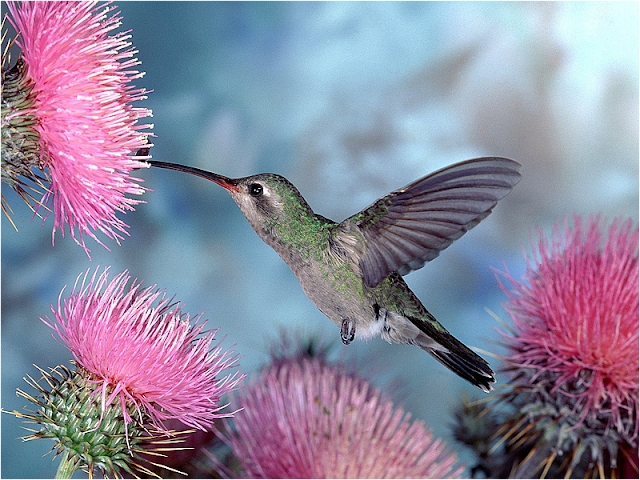
Using this original image.

Let's see a couple things. Sharpened.
Sharpened and Blurred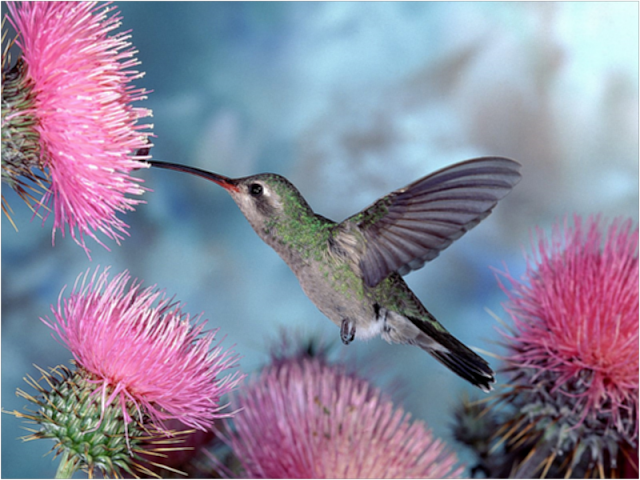
Anti-Blurred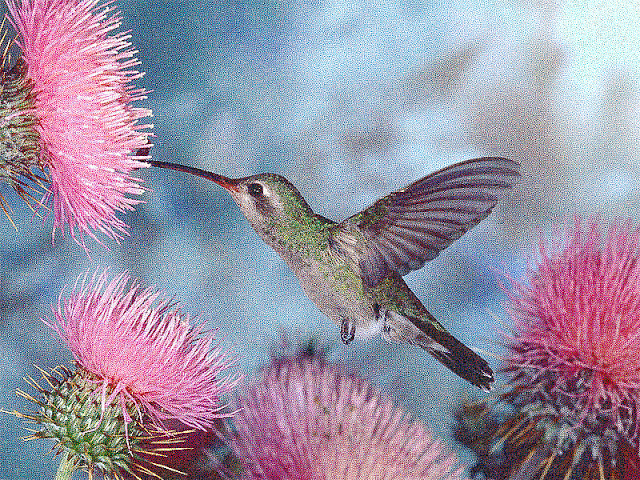
As a fun quirk, I tried to solve the image for blurring. Finding an image which would best look like the original image after being blurred. Which is, I believe, going to be an np problem. As one path precludes other paths, and your likely going to run through the problem with some approximation. In fact, it might be possible to apply such an algorithm to a color quantized image sans blurring with implied blur and render images which are data sparse and solvable to something approximating the original image. Like a blur-implied gif image. The anti-blurred image approximation (finding the optimal might well be np-impossible, or rather knowing that it's the optimal when you have it).
Anti-Blurred Image Blurred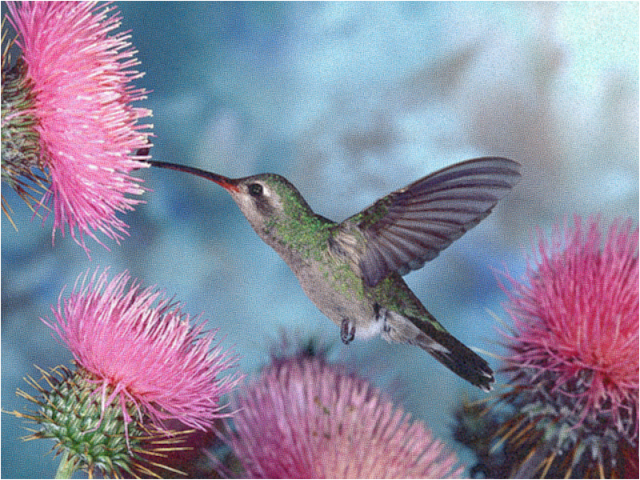
When we apply a box blur to the image we get the above.
There may be some merit to the idea, but it might need some better encoding methods. As is this takes the same amount of data to display the blur-implied image than the original image. But, it may well have some methods therein to allow for pretty effective color mixing from a reduced subset of colors.
Using this original image.

Let's see a couple things. Sharpened.

Sharpened and Blurred

Anti-Blurred

As a fun quirk, I tried to solve the image for blurring. Finding an image which would best look like the original image after being blurred. Which is, I believe, going to be an np problem. As one path precludes other paths, and your likely going to run through the problem with some approximation. In fact, it might be possible to apply such an algorithm to a color quantized image sans blurring with implied blur and render images which are data sparse and solvable to something approximating the original image. Like a blur-implied gif image. The anti-blurred image approximation (finding the optimal might well be np-impossible, or rather knowing that it's the optimal when you have it).
Anti-Blurred Image Blurred

When we apply a box blur to the image we get the above.
There may be some merit to the idea, but it might need some better encoding methods. As is this takes the same amount of data to display the blur-implied image than the original image. But, it may well have some methods therein to allow for pretty effective color mixing from a reduced subset of colors.
Thursday, September 13, 2012
Thomas Babington Macaulay (Quotes)
To every man upon this earth
Death cometh soon or late.
And how can man die better
Than facing fearful odds,
For the ashes of his fathers,
And the temples of his gods?
Horatius, st. 27.
Thursday, September 6, 2012
Color Distribution Methodology
Getting independent colors which are maximally dissimilar from all previous colors is a fairly common problem. The standard suggested algorithm is to subdivide the most significant differences in colors and then pattern them. I thought this was the case too. So much so that I solved the problem because I thought it would be very useful (and it might). Generally this required two minor breakthroughs understanding how to encode maximally significant differences in colors through binary (flip the ends), which I went through a lot of struggle to get to including my anti-gray codes and derivation algorithm and proof (intersperced gray codes with an additional zero anywhere in it and flipped will maximize hamming distance). And secondly understanding the patterning such that I could derive any value without iteration of the previous values.
Well, looking at the results, it quickly seems that they aren't that great.

Largely there are issues with greens being pretty close even when their RGB values are far, and the patterns constantly making what turn out to be slight variations of your standard pure colors RGB and CYM. You start clashing rather quickly.
The better solution is computationally much more difficult. And generally sort of cheating. You do the hard work. You run through every color you can represent in RGB (16,77,216 of them) and run a heavy duty color distance routine, likely CIE-Lab 2000, then you go in there and manually choose the colors. And then use this as a master list and just read from the list. The standard solution starts picking some greens that look pretty much like the previous greens after like 20. And you should be able to get like 50 colors or so which are visually distinct from one another. Perhaps with pruning of the list by hand.
Using 20k guesses (rather than brute forcing 16-million) I produced this after an hour or so.

There's likely not much left to gain brute forcing the algorithm, but I did (for a smaller value 64) and came out with this.

Which manages to out perform the heck out of the dividing algorithm and could just be read by a standard list. There might be some enhancements to be achieved by converting away from finding maximally good results initially which may cost the overall result to become pareto optimal. Or employ something like k-mean clustering in LabDE2000 colorspace (not really defined as a colorspace but pretty much is exactly that) to better maximize the list. Or goodness forbid collect data by humans voting (it's how the color spaces came about, that and math to approximate that data). Although, this would need to be done in somewhat controlled systems because human eyes are excessively sensitive to conditions. Some colors look similar on a black background when they wouldn't on a white background. Which could maybe be randomized to average out or find colors that do this less than others. It wouldn't be too hard to define a list or two which specifically address this question, because programmatically the question of which colors seem very distinct from a set of previously distinct colors has nothing really to do with computers but humans and how they perceive color, and the ability to approximate this has everything to do with humans and not that much to do with programming.
Observations which have been noted before.
http://www.edwardtufte.com/bboard/q-and-a-fetch-msg?msg_id=0001JS
There are some good color dictionaries out there. But, I'm not convinced there are much more optimal solutions. And it turns out the algorithms needed are much better at making color dictionaries than they would be generating colors on the fly. And since we're dealing with 64 colors max, we're much better doing that.
Well, looking at the results, it quickly seems that they aren't that great.

Largely there are issues with greens being pretty close even when their RGB values are far, and the patterns constantly making what turn out to be slight variations of your standard pure colors RGB and CYM. You start clashing rather quickly.
The better solution is computationally much more difficult. And generally sort of cheating. You do the hard work. You run through every color you can represent in RGB (16,77,216 of them) and run a heavy duty color distance routine, likely CIE-Lab 2000, then you go in there and manually choose the colors. And then use this as a master list and just read from the list. The standard solution starts picking some greens that look pretty much like the previous greens after like 20. And you should be able to get like 50 colors or so which are visually distinct from one another. Perhaps with pruning of the list by hand.
Using 20k guesses (rather than brute forcing 16-million) I produced this after an hour or so.

There's likely not much left to gain brute forcing the algorithm, but I did (for a smaller value 64) and came out with this.
Which manages to out perform the heck out of the dividing algorithm and could just be read by a standard list. There might be some enhancements to be achieved by converting away from finding maximally good results initially which may cost the overall result to become pareto optimal. Or employ something like k-mean clustering in LabDE2000 colorspace (not really defined as a colorspace but pretty much is exactly that) to better maximize the list. Or goodness forbid collect data by humans voting (it's how the color spaces came about, that and math to approximate that data). Although, this would need to be done in somewhat controlled systems because human eyes are excessively sensitive to conditions. Some colors look similar on a black background when they wouldn't on a white background. Which could maybe be randomized to average out or find colors that do this less than others. It wouldn't be too hard to define a list or two which specifically address this question, because programmatically the question of which colors seem very distinct from a set of previously distinct colors has nothing really to do with computers but humans and how they perceive color, and the ability to approximate this has everything to do with humans and not that much to do with programming.
Observations which have been noted before.
http://www.edwardtufte.com/bboard/q-and-a-fetch-msg?msg_id=0001JS
There are some good color dictionaries out there. But, I'm not convinced there are much more optimal solutions. And it turns out the algorithms needed are much better at making color dictionaries than they would be generating colors on the fly. And since we're dealing with 64 colors max, we're much better doing that.
Tuesday, September 4, 2012
Color Space Comparisons.
So which color space is best.
Using a list of 9413 0 <= R,G,B <= 255, Step 15 colors (17³). And the orange from the Blogger icon. I sorted a bunch of 4x4 boxes for a large variety of color spaces. The diagrams are read left to right top to bottom. The first color is the index color. And the point is to have the colors very similar to that color closer to it. And try to avoid having any colors close to that color further away or very dissimilar colors further. This is a bit hard to figure out but you can generally eyeball it. The top should be the matching colors. You shouldn't have very similar colors to that strewn about the diagram.
The boxes are 70x70 which is 1400, - 1 for the index color. This means 14 of the most different colors will not be shown.
 Addative color. Don't think Euclidean is the simplest distance. I literally took the value distances of the R, G, B, added them up and called that a distance.
 Euclidean Distance RGB
Sqrt(R² + G³ + B²)
 Redmean
long rmean = ( (long)r1 + (long)r2 ) / 2;
long r = (long)r1 - (long)r2;
long g = (long)g1 - (long)g2;
long b = (long)b1 - (long)b2;
return Math.sqrt((((512+rmean)*r*r)>>8) + 4*g*g + (((767-rmean)*b*b)>>8));
Given at:
http://www.compuphase.com/cmetric.htm
Which is actually a pretty great article.
 Luv, Standard Euclidean
The Redmean page says it gives pretty close to Luv colorspace with much less programming power needed. So here's Luv. Luminescence u, v.
 Lab, Delta E (standard Euclidean distance)
sqrt(L² + a² + b²)
 Lab, Delta 94
Same Lab color space, but rather than a standard Euclidean Color distance the good folks at CIE in 1994 decided to go ahead and tweak it a bit.
 Lab, Delta E 2000, CIEDE2000
Using the reworked tweaked distance formula from 2000. I actually like quite a lot. It's my personal favorite and seems to give very consistent results. And consistently good results.
 Lab Delta CMC
Intended for threads, paints, dyes, etc. It's the standard for that industry. Apparently you're much better off with a color to dye something than no color. Which is maybe why everything with no color is basically at the bottom, maximally far away from colors with saturation.
 Hunter Lab, it uses the XYZ color space (which LAB also uses) and uses a different way to get the L,a,b values. Which are luminescence and some complementary colors.
 HSL. You can't just plop this into a Euclidean distance formula you need to make a shape and get the distance within that shape. Anything with a hue, must have this done. Because H=360° and H=0° are not polar opposites, they are the same color. They should be in the same place not 360² away from each other.
In this case, I have some old code and it's wrapped up in a two stuck together half cone. Which is to say that it's a cone where the L value ends half way at the cone, and has maximal colors at L = 0.5.
 HSB/HSV
Using value rather than lightness Placed into a cone.
double X = S*V*Math.cos(H);
double Y = S*V*Math.sin(H);
double Z = V;
Directly invokes the HSB routine from Java's Color.RGBtoHSV() routine.
 HCL: M. Sarifuddin and Rokia Missaoui
I just wrote a very long article dissing this color space. Mostly because it's ill defined and claims to be better than it is through methodological flaws. And I dunno what else.
 Weighted Euclidean: 22,43,35
About this time last year, I wrote a blog post where I ran all the numbers for Delta E, Lab. And averaged the distances based on the specific colors and came up with these weights. Also noting the Compuphase paper got similar results. There are standard given weights but these are actually for Gamma. They are the weights as to how much that color contributes to how bright the color looks. 30,59,11 are correct weights here, blue contributes very little to how bright a color seems. In fact, anti-blue (yellow) is wildly bright like bizarrely so. You can't even read yellow text on a white background.
 Weighted Euclidean: 30,59,11
We're dealing with Orange (specifically Blogger Icon Orange). So the huge over emphasis on red is going to make it cluster like this but, let's check out a couple other colors with similar weights.
 Weighted Euclidean: 22,43,35
 Weighted Euclidean: 30,59,11
 Weighted Euclidean: 22,43,35
 Weighted Euclidean: 30,59,11
The weighting here is very anti-blue. As a result bluish colors get tossed all over the place.
The blue here is Google Icon blue (66,133,244).
 Lab Delta 2000, Green
For Reference.
 Lab Delta 2000, Google Blue
For Reference
Hopefully we should have a better idea about color spaces and which ones may or may not be good or bad. And a pretty firm grasp on the weighted Euclidean weights for color distance being wrong. Those are fine weight when we're looking for gamma, but how bright we see colors is different than how discriminating we are between colors. You are much better with 2,4,3 than that 30,59,11 crap. Or a much better color distance formula.
Using a list of 9413 0 <= R,G,B <= 255, Step 15 colors (17³). And the orange from the Blogger icon. I sorted a bunch of 4x4 boxes for a large variety of color spaces. The diagrams are read left to right top to bottom. The first color is the index color. And the point is to have the colors very similar to that color closer to it. And try to avoid having any colors close to that color further away or very dissimilar colors further. This is a bit hard to figure out but you can generally eyeball it. The top should be the matching colors. You shouldn't have very similar colors to that strewn about the diagram.
The boxes are 70x70 which is 1400, - 1 for the index color. This means 14 of the most different colors will not be shown.
Sqrt(R² + G³ + B²)
long rmean = ( (long)r1 + (long)r2 ) / 2;
long r = (long)r1 - (long)r2;
long g = (long)g1 - (long)g2;
long b = (long)b1 - (long)b2;
return Math.sqrt((((512+rmean)*r*r)>>8) + 4*g*g + (((767-rmean)*b*b)>>8));
Given at:
http://www.compuphase.com/cmetric.htm
Which is actually a pretty great article.
The Redmean page says it gives pretty close to Luv colorspace with much less programming power needed. So here's Luv. Luminescence u, v.
sqrt(L² + a² + b²)
Same Lab color space, but rather than a standard Euclidean Color distance the good folks at CIE in 1994 decided to go ahead and tweak it a bit.
Using the reworked tweaked distance formula from 2000. I actually like quite a lot. It's my personal favorite and seems to give very consistent results. And consistently good results.
Intended for threads, paints, dyes, etc. It's the standard for that industry. Apparently you're much better off with a color to dye something than no color. Which is maybe why everything with no color is basically at the bottom, maximally far away from colors with saturation.
In this case, I have some old code and it's wrapped up in a two stuck together half cone. Which is to say that it's a cone where the L value ends half way at the cone, and has maximal colors at L = 0.5.
Using value rather than lightness Placed into a cone.
double X = S*V*Math.cos(H);
double Y = S*V*Math.sin(H);
double Z = V;
Directly invokes the HSB routine from Java's Color.RGBtoHSV() routine.
I just wrote a very long article dissing this color space. Mostly because it's ill defined and claims to be better than it is through methodological flaws. And I dunno what else.
About this time last year, I wrote a blog post where I ran all the numbers for Delta E, Lab. And averaged the distances based on the specific colors and came up with these weights. Also noting the Compuphase paper got similar results. There are standard given weights but these are actually for Gamma. They are the weights as to how much that color contributes to how bright the color looks. 30,59,11 are correct weights here, blue contributes very little to how bright a color seems. In fact, anti-blue (yellow) is wildly bright like bizarrely so. You can't even read yellow text on a white background.
We're dealing with Orange (specifically Blogger Icon Orange). So the huge over emphasis on red is going to make it cluster like this but, let's check out a couple other colors with similar weights.
The weighting here is very anti-blue. As a result bluish colors get tossed all over the place.
The blue here is Google Icon blue (66,133,244).
For Reference.
For Reference
Hopefully we should have a better idea about color spaces and which ones may or may not be good or bad. And a pretty firm grasp on the weighted Euclidean weights for color distance being wrong. Those are fine weight when we're looking for gamma, but how bright we see colors is different than how discriminating we are between colors. You are much better with 2,4,3 than that 30,59,11 crap. Or a much better color distance formula.
HCL: a new Color Space for a pack of lies.
HCL: a new Color Space for a more Effective
Content-based Image Retrieval
M. Sarifuddin and Rokia Missaoui
RESEARCH REPORT
D´epartement d’informatique et d’ing´enierie, Universit´e du Qu´ebec en Outaouais,
C.P. 1250, Succ. B, Gatineau (Qc), Canada, J8X 3X7.
I conduct an analysis of many dominant color spaces. Including the pack of lies called HCL. I've use colorspaces rather frequently and have implementations of all the major ones. Due to the modular nature of they are rather easy to collect. So seeing a reference to HCL (by M. Sarifuddin and Rokia Missaoui), I decided to give it a try. I managed to find a good implementation in PERL (Copyright (C) 2007, Mattia Barbon) and port it over to java to give it a try. After all the pretty pictures in the paper made it seem really effective.

Look how obvious (i) is better than something silly like DeltaE LAB. That's so superior! But, wait, some of those figures don't make sense. DeltaE is the change in the Euclidean distance. Sure, you can toss it at the tristimulus values in RGB, and LAB but LCH clearly has H. Hue. You can't apply it there. And Delta E94, is a modification of LAB colors. Why are you applying to things which aren't lab? And a cylindric distance on HSV? That's typically viewed as a cone but I suppose a cylinder would work too. But, moreover, why does I get to have so much more yellow? I mean, am I to suppose that Delta E, LAB just thinks those greens are much closer? Or is there a major flaw in methodology here?
So checking the methodology we find that it randomly chooses crimped RGB colors 0 <= R,G,B <=255, step 15. So there's 17 different steps in any of the particular RGB values. And 4913 (17³) different colors available. So loading up my trusty Photoshop eye dropper (on auspices of finding the same first index color of yellow for a test) I came across an oddity. These values are not mod-15. It can't really have used this methodology, that or some color rounding issue caused it to fail or the conversion of the colors into a .pdf did some color quantization, in a paper about color.
Checking figure 3i, here we find that this theory cannot be justified at all. The color yellow is 253,254,31. The next three boxes are only changed by their blue component 34,39,45. These colors are not permitted by the methodology. SHENANIGANS! Not only do you have a heck of a lot of yellow, you have yellows you're not even *allowed* to have.
Also, why are these "randomly" varying? "Each one of them is compared to a collection of randomly generated colors using each one of the proposed similarity measures." -- No. That's not fair. Then if your distance criteria is unforgiving you simply win. If the color is within 3 values between RGB, go ahead and give that a distance of 1. For *everything else* return a infinity. Well then it just keeps randomly getting new colors until it finds things that my threshold function allows? Namely pretty much identical colors?
Let's try this again, with something proper. 48 squares. Index color and first 47 colors sorted from this 4913. No random. No threshold. The closest colors without repeats given that specific criteria.


Hunter Lab

Luv

RGB Delta Euclidean

Redmean

And Finally....
Drumroll please
HCL!

Oh, did I mention the hue formula is wrong?
It treats rg (R - G) and gb (G - B) as complimentary colors. These aren't complementary but tristimulus. It corrects this by tweaking the ranges of the hue. What was 90 and 90 becomes 60 and 120. Nudging the hue into where it would be if there were complementary colors.
if (rg >= 0 && gb >= 0) {
H = 2 * H / 3;
} else if (rg >= 0 && gb < 0) {
H = 4 * H / 3;
} else if (rg < 0 && gb >= 0) {
H = 180 + 4 * H / 3;
} else if (rg < 0 && gb < 0) {
H = 2 * H / 3 - 180;
}
Since it uses Arctan(rg/gb) to make the hue ranging from -90° to +90° it needs to shift two of the sections over. And the paper wrongly chooses the -+, and --. When really it should use +-, --. Shifting over quadrant II and IV rather than III, IV. The angle 0 is +Y, not +X. The range being utilized are quadrant I, and quadrant III. The +Y bits. When the Y (in this case gb) is negative it needs to be rotated by 180. It does this for +X sections. Leaving nothing in quadrant I, and two overlapping color areas in quadrant III.
+180 and -180 are the same thing. It doesn't matter which way you turn when you turn around. You end up around. So really it should be:
if (gb > 0) H += 180;
rather than,
if (rg > 0) H += 180;
Though in the equations this is done to preserve the sign.
You properly need to invert the hue. And roll it over to to the other side.

This turns out to be a lot of work for something that isn't really that great. The colors are read left to right, top to bottom. And it *should* have the closest colors to the index color. So the fact that there's a color in the 3 row that looks a lot like the index color and certainly more than the browns and greens in there. Means that it gets marked off. Compare this to something rather nice like LAB DeltaE2000:
While there are some colors that seem a bit closer (though the viewing area can make a significant amount of difference with background colors etc) it really does seem to keep the best colors right up top.
But, the paper also includes it's own distance formula. Rather than using cylindrical distance, we can use DistanceHCL. Which gives us:

Is this an improvement? Yes. Is this an improvement over CIEDE2000 (Lab DeltaE2000), no. Not remotely.
One of the things that should be noted is that there's a big difference between color distance routines which are simply different foldings of RGB space, and things like LAB which actually pushes and pulls various hue ranges with regard to human eyes. It makes a big difference apparently because regardless how well you can tweak the space into a different shape, if there's no regard to the color of that shape at a some specific area you will always be hampered by the non-linear nature of RGB. We see greens more clearly than blues, and blues better than reds (although blue makes less of a contribution to our perception of gamma).
Sunday, September 2, 2012
Color Distribution Code.
So final draft:
The first 729 (9^3) colors displayed in a 27x27 cube.

public Color getColor(int i) {
return new Color(getRGB(i));
}
public int getRGB(int index) {
int[] p = getPattern(index);
return getElement(p[0]) << 16 | getElement(p[1]) << 8 | getElement(p[2]);
}
public int getElement(int index) {
int value = index - 1;
int v = 0;
for (int i = 0; i < 8; i++) {
v = v | (value & 1);
v <<= 1;
value >>= 1;
}
v >>= 1;
return v & 0xFF;
}
public int[] getPattern(int index) {
int n = (int)Math.cbrt(index);
index -= (n*n*n);
int[] p = new int[3];
Arrays.fill(p,n);
if (index == 0) {
return p;
}
index--;
int v = index % 3;
index = index / 3;
if (index < n) {
p[v] = index % n;
return p;
}
index -= n;
p[v ] = index / n;
p[++v % 3] = index % n;
return p;
}
The first 729 (9^3) colors displayed in a 27x27 cube.
Color Distribution sans recursion.
I did a bit of math and got rid of the recursive section.
Turns out you can calculate N without iterating the whole thing, but by rather taking the cube root or the index. Which makes sense if you consider all the previous patterns with characters from 0-(N-1) would take N*N*N space to use up and we by definition used that up.
public int[] getPattern(int index) {
int n = (int)Math.cbrt(index);
index -= (n*n*n);
int[] p = new int[3];
Arrays.fill(p,n);
if (index == 0) {
return p;
}
index--;
int v = index % 3;
index = index / 3;
if (index < n) {
p[v] = index % n;
return p;
}
index -= n;
p[v ] = index / n;
p[++v % 3] = index % n;
return p;
}
Subscribe to:
Posts (Atom)